I recently started following MWF Seeking BFF. Just like Rachel, all my college BFFs are far-flung around the country. Forget about A Good Man (thanks Flannery!), a BFF is really hard to find (but it is possible ;-) I appreciate that Rachel is bringing this struggle out into the open!
How does this relate to books? Well, some of the latest "strong female leads" of the last decade do not have BFFs.
Read more here: It's Hunger Games Day!
But I don't think this is a new problem. Throughout literature, few women or girls have BFFs. Alice. Dorothy. (Sure, she had Scarecrow, Woodsman, and Lion, but none of those are women/girls.) Jo in Little Women. Elizabeth Bennet in Pride & Prejudice. Laura in the Little House series. (Sisters, yes, but no BFF - it's different.) Emma. (She treated her women peers as projects more than friends.) Certainly not forlorn Jane Eyre (her BFF tragically dies early in the tale) or Daisy Buchanan (Great Gatsby), or even Hermione Grainger.
I have to think about this some more.
If Helen of Troy had had a BFF, would she have run off with Paris? Did Penelope (of the Odyssey) have a BFF (would have made all that weaving a little less tedious, I think)?
Why can men in literature have a "Band of Brothers," or even just a "buddy" (a la Butch Cassidy and the Sundance Kid) but it's rare among female literary characters?
23 March 2012


19 March 2012
"Panem et Circenses"
Panem et Circenses: "Bread and Circuses" - the techniques used by the Roman Empire to keep the population docile. We won't rise up if we're not hungry, and we're adequately entertained, especially at the (gladiatorial) expense of others. 
THAT is what makes The Hunger Games so frightening to me. Its proximity to reality, giving me the sneaking suspicion that contemporary America is kept quiet by a certain amount of panem et circenses. We are unlikely to question authority or even take much civic action. Not when we have Taco Bell and Burger King and Doritos, and professional sports (in which the fans riot and loot after both major wins & losses) and Survivor and American Idol.
But the converse is also scary - a significant number of Americans carry concealed weapons because they do not trust authority. That I read last week that in one state (I can't remember where), civilians may kill police officers who "trespass" on their property (for more of this concept, check out Indiana's new law - ugh). That many in the Far Right believe and fear that the Feds want to control us through social welfare programs. Want to keep standing militias. Expecting and preparing to repel a major Federal Takeover is no less terrifying.
I don't want to be part of the Capitol and the Peacekeepers, nor one of the Rebels.
There's so much being written about The Hunger Games trilogy right now, with the first movie debuting this weekend. It's a relevant time to reflect on what this narrative says about our world today.
Last week my friend asked me if she thought Hunger Games would be too violent for her 10-yr-old daughter to read (my 10-yr-old son has read Book 1, and loved it).
If a book is too terrifying, you can always put it down. Sadly, you cannot put "real life" down. You can turn off the TV, but real life atrocity is still there.
Today, every 10-yr-old child has existed in an era of continuous war. With an awareness of the Taliban. People in authority who sexually molest children. Terrible violence against women in Afghanistan. Buildings collapsing and burning in lower Manhattan. North Korean gulags.Haiti and Japan after the earthquake, South Asia after the tsunami. Joseph Kony, atrocities, and child soldiers of sub-Saharan Africa.
Is The Hunger Games, a work of fiction, more or less shocking than real life?
Let's play Peeta's sanity game: real or not-real?
Update: Check out this "Letter to the Editor" published by Time on April 2: "Children are already exposed to violence" - my thoughts almost exactly.
THAT is what makes The Hunger Games so frightening to me. Its proximity to reality, giving me the sneaking suspicion that contemporary America is kept quiet by a certain amount of panem et circenses. We are unlikely to question authority or even take much civic action. Not when we have Taco Bell and Burger King and Doritos, and professional sports (in which the fans riot and loot after both major wins & losses) and Survivor and American Idol.
But the converse is also scary - a significant number of Americans carry concealed weapons because they do not trust authority. That I read last week that in one state (I can't remember where), civilians may kill police officers who "trespass" on their property (for more of this concept, check out Indiana's new law - ugh). That many in the Far Right believe and fear that the Feds want to control us through social welfare programs. Want to keep standing militias. Expecting and preparing to repel a major Federal Takeover is no less terrifying.
I don't want to be part of the Capitol and the Peacekeepers, nor one of the Rebels.
There's so much being written about The Hunger Games trilogy right now, with the first movie debuting this weekend. It's a relevant time to reflect on what this narrative says about our world today.
Last week my friend asked me if she thought Hunger Games would be too violent for her 10-yr-old daughter to read (my 10-yr-old son has read Book 1, and loved it).
If a book is too terrifying, you can always put it down. Sadly, you cannot put "real life" down. You can turn off the TV, but real life atrocity is still there.
Today, every 10-yr-old child has existed in an era of continuous war. With an awareness of the Taliban. People in authority who sexually molest children. Terrible violence against women in Afghanistan. Buildings collapsing and burning in lower Manhattan. North Korean gulags.Haiti and Japan after the earthquake, South Asia after the tsunami. Joseph Kony, atrocities, and child soldiers of sub-Saharan Africa.
Is The Hunger Games, a work of fiction, more or less shocking than real life?
Let's play Peeta's sanity game: real or not-real?
Update: Check out this "Letter to the Editor" published by Time on April 2: "Children are already exposed to violence" - my thoughts almost exactly.
13 March 2012
Where the heck have I been?
When I launched this blog, I promised myself that I would stick with it. So where have I been this last month? Well, reading.... a LOT (and knitting a lot, but I digress), but not ready to blog about some of it.
 I finished Flannery O'Connor's Wise Blood in February. I gave it one star on GoodReads. I didn't like it, no, I did not. All the characters were unlikeable. The physical self-mutilation was horrifying, the emotional self-mutilation was just plain sad. And there was a certain squishy, clammy realism about humanity that was kind of nauseating to me.
I can't understand Hazel Motes' "Church of Christ without Christ" - what is the POINT?? Is he an atheist? Is he reacting against the evangelical Protestantism and itinerant preaching of the South? Reacting against World War II? The loss of his home & family? All of it??
I loved O'Connor's A Good Man is Hard to Find in the early 1990s. Maybe it's a better book (short stories, really) or maybe I am different now. Anyway, I wouldn't have been as wild about Flannery if I'd read Wise Blood first. I admire that it was likely a radical book when it was first published in 1949, but I just didn't enjoy the Southern Gothic existential malaise.
 Finished Jeffrey Eugenides Virgin Suicides a couple of nights ago. I think Eugenides is quirky good. I liked Middlesex when I read it a few years ago (almost 6 years ago! Time flies!). This one wasn't quite as gripping somehow, but let's face it, it was his debut book! I think the author is completely fascinated with the lives of women and girls... especially the hidden aspects of life. The "narrator" of this work is a male peer of the girls.... the desperation of wanting to know, to SAVE the girls is palpable. I think Eugenides wants to know everything about women. By Middlesex I think he allowed himself to become one, if only in his imagination, but vividly so! Are we really that interesting and mysterious?
This book was pretty angst-y too, I mean, they all kill themselves (no spoiler there... note the title), but it wasn't just the girls giving up on life, it was their house, falling down around their ears, and even the elms, dying on their street. The girls were prisoners to their parents' over-protective behavior. Perhaps it's a morality play: Mom & Dad hold onto their daughters so tightly, they crush them to death. Making Lux burn her records won't stop her from loving rock 'n' roll; keeping her locked in the house won't even keep her from finding a long list sexual partners. One CAN'T control another person. There might be the temporary appearance of control, but eventually it will end - and quite possibly, BADLY.
I've read four books that I'm not ready to blog about yet: "The Hunger Games" trilogy (I'm on Mockingjay, Book 3 of 3), and Dennis Lehane's "Kenzie & Gennaro" mysteries (on Book 3 of 6). I know I'm always late to the party, but WOW. I read A Drink Before the War and Darkness, Take My Hand in about three days each. Each of these series is all of a piece, so it makes sense to treat them as such.
Bear with me between entries!

I can't understand Hazel Motes' "Church of Christ without Christ" - what is the POINT?? Is he an atheist? Is he reacting against the evangelical Protestantism and itinerant preaching of the South? Reacting against World War II? The loss of his home & family? All of it??
I loved O'Connor's A Good Man is Hard to Find in the early 1990s. Maybe it's a better book (short stories, really) or maybe I am different now. Anyway, I wouldn't have been as wild about Flannery if I'd read Wise Blood first. I admire that it was likely a radical book when it was first published in 1949, but I just didn't enjoy the Southern Gothic existential malaise.
Onward.
 Finished Jeffrey Eugenides Virgin Suicides a couple of nights ago. I think Eugenides is quirky good. I liked Middlesex when I read it a few years ago (almost 6 years ago! Time flies!). This one wasn't quite as gripping somehow, but let's face it, it was his debut book! I think the author is completely fascinated with the lives of women and girls... especially the hidden aspects of life. The "narrator" of this work is a male peer of the girls.... the desperation of wanting to know, to SAVE the girls is palpable. I think Eugenides wants to know everything about women. By Middlesex I think he allowed himself to become one, if only in his imagination, but vividly so! Are we really that interesting and mysterious?
This book was pretty angst-y too, I mean, they all kill themselves (no spoiler there... note the title), but it wasn't just the girls giving up on life, it was their house, falling down around their ears, and even the elms, dying on their street. The girls were prisoners to their parents' over-protective behavior. Perhaps it's a morality play: Mom & Dad hold onto their daughters so tightly, they crush them to death. Making Lux burn her records won't stop her from loving rock 'n' roll; keeping her locked in the house won't even keep her from finding a long list sexual partners. One CAN'T control another person. There might be the temporary appearance of control, but eventually it will end - and quite possibly, BADLY.
I've read four books that I'm not ready to blog about yet: "The Hunger Games" trilogy (I'm on Mockingjay, Book 3 of 3), and Dennis Lehane's "Kenzie & Gennaro" mysteries (on Book 3 of 6). I know I'm always late to the party, but WOW. I read A Drink Before the War and Darkness, Take My Hand in about three days each. Each of these series is all of a piece, so it makes sense to treat them as such.
Bear with me between entries!
10 February 2012
I am introvert, hear me ROAR!
I know I'm on a tangent away from my Shelf Project, but I can't resist the public library.
Being an introvert seems to be the cause celebre lately. Time recently featured Introverts in their Jan 26 issue: "Shhh! The Quiet Joys of the Introvert"
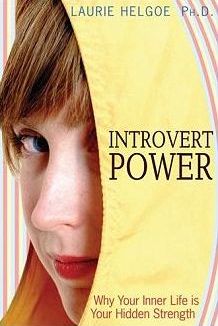
 I read Laurie Helgoe's Introvert Power last week. So refreshing to be reminded (if not taught for the first time) that I'm not some sort of misanthropic recluse just because I find some kind of parties difficult (if not intolerable) yet I love spending hours and hours with dear friends with whom I can be my "true self."
At times in my life I've thought that I was a little weird. Everyone loves parties but me, right?! I am an outgoing person. I'm NOT shy, I'm cheeky, I enjoy conversation, and I love to perform (all those years of singing!). Turns out that MANY performers are introverts. Johnny Carson was a legendary introvert.
In college I read Virginia Woolf's A Room of One's Own. OMG, yes. And for two years, I actually HAD a room of my own. I love my family, but I'd sure like a place to retreat from them sometimes. A place all MINE.
Also solves the question of why I'm never bored, and love, no, CRAVE "alone time." How could I EVER be bored when I have a house full of books, bins full of yarn, and more than six years of photos to scrapbook? And why my extraverted husband and I often have a hard time enjoying the same sorts of social activities: he could go to parties every single weekend, but to me, that sounds awful. When would I have time to "re-charge"?
(Sidebar: DS never dares to say "I'm bored" because he knows the answer he'll get from me every time: "Only boring people are bored.")
Helgoe gives advice on how to navigate the challenges of being an introvert in a culture that values extravertedness in the extreme. Turns out I'm already doing several of her tips. Like, if I need to leave the party before DS wants to, I give him 20 or 30 minutes warning that "I'm ready to go," and if he still wants to stay, I leave, and he'll need to find another ride home. When I bring a knitting project to a gathering, that's another coping mechanism for me. I'm usually knitting socks, but I guess I could be knitting a metaphorical security blanket...
It also explains why my very FAVORITE place to be is Manhattan or downtown Boston. Bustling with interesting people and things to do and see, but not in a way that I necessarily need to interact in any kind of intense way. I love the feeling of being lost in the crowd - the fly on the wall observing everyone else. Why I treasure an opportunity to take a day, alone, to go to Boston and wander Copley Square, the Public Garden, the Museum of Fine Arts, and maybe over to Harvard Square, me, myself, my camera, and my journal. Sigh. LOVE.
But it's not that introvertedness is some sort of handicap. Helgoe says that a little more than half the population identifies as introvert. If anything, I think it's why I'm introspective, and I like that about myself. If it wasn't for all the praying (and obedience..... and celibacy ;-), I could appreciate the lifestyle of a contemplative nun.
So I guess this blog is the ultimate introverted endeavor. A book group by myself! Ha!
Being an introvert seems to be the cause celebre lately. Time recently featured Introverts in their Jan 26 issue: "Shhh! The Quiet Joys of the Introvert"
At times in my life I've thought that I was a little weird. Everyone loves parties but me, right?! I am an outgoing person. I'm NOT shy, I'm cheeky, I enjoy conversation, and I love to perform (all those years of singing!). Turns out that MANY performers are introverts. Johnny Carson was a legendary introvert.
In college I read Virginia Woolf's A Room of One's Own. OMG, yes. And for two years, I actually HAD a room of my own. I love my family, but I'd sure like a place to retreat from them sometimes. A place all MINE.
Also solves the question of why I'm never bored, and love, no, CRAVE "alone time." How could I EVER be bored when I have a house full of books, bins full of yarn, and more than six years of photos to scrapbook? And why my extraverted husband and I often have a hard time enjoying the same sorts of social activities: he could go to parties every single weekend, but to me, that sounds awful. When would I have time to "re-charge"?
(Sidebar: DS never dares to say "I'm bored" because he knows the answer he'll get from me every time: "Only boring people are bored.")
Helgoe gives advice on how to navigate the challenges of being an introvert in a culture that values extravertedness in the extreme. Turns out I'm already doing several of her tips. Like, if I need to leave the party before DS wants to, I give him 20 or 30 minutes warning that "I'm ready to go," and if he still wants to stay, I leave, and he'll need to find another ride home. When I bring a knitting project to a gathering, that's another coping mechanism for me. I'm usually knitting socks, but I guess I could be knitting a metaphorical security blanket...
It also explains why my very FAVORITE place to be is Manhattan or downtown Boston. Bustling with interesting people and things to do and see, but not in a way that I necessarily need to interact in any kind of intense way. I love the feeling of being lost in the crowd - the fly on the wall observing everyone else. Why I treasure an opportunity to take a day, alone, to go to Boston and wander Copley Square, the Public Garden, the Museum of Fine Arts, and maybe over to Harvard Square, me, myself, my camera, and my journal. Sigh. LOVE.
But it's not that introvertedness is some sort of handicap. Helgoe says that a little more than half the population identifies as introvert. If anything, I think it's why I'm introspective, and I like that about myself. If it wasn't for all the praying (and obedience..... and celibacy ;-), I could appreciate the lifestyle of a contemplative nun.
So I guess this blog is the ultimate introverted endeavor. A book group by myself! Ha!
08 February 2012
You must read Laura Hillenbrand's Unbroken, the incredible story of Louie Zamperini: Olympic athlete, WWII veteran and survivor of 27 months in a Japanese POW (slave) camp. Warning: this is NOT Hogan’s Heroes. Not even close.
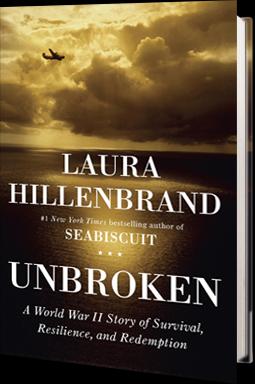 This was never a part of my assignment shelf. I started reading it more than eight months ago, but I had to “put it down” because it became so emotionally difficult. The language was beautifully readable – the content was virtually unbearable. Nevertheless, entirely worth the effort.
I read the last 250 pages or so in just two evenings, practically chasing my family away from me so I could read. The appalling stories of physically agony were harrowing, but the descriptions of the emotional trauma were even worse. Even after surviving a month-and-a-half lost at sea, Louie and fellow airmen, sailors, and soldiers from many Allied forces were imprisoned in a series of POW camps that were NOT in accordance with Geneva Convention or International Red Cross standards:
The crash of Green Hornet had left Louie and Phil in the most desperate physical extremity, without food, water, or shelter. But on Kwajalein [the first camp], the guards south to deprive them of something that had sustained them even as all else had been lost: dignity. This self-respect and sense of self-worth, the innermost armament of the soul, lies at the heart of humanness; to be deprived of it is to be dehumanized, to be cleaved from, and cast below, mankind. Men subjected to dehumanizing treatment experience profound wretchedness and loneliness and find that hope is almost impossible to retain. Without dignity, identity is erased. In its absence, men are defined not by themselves, but by their captors and the circumstances in which they are forced to live.
Few societies treasured dignity, and feared humiliation, as did the Japanese, for whom a loss of honor could merit suicide. This is likely one of the reasons why Japanese soldiers in World War II debased their prisoners with such zeal, seeking to take from them that which was most painful and destructive to lose. On Kwajalein, Louie and Phil learned a dark truth know to the doomed in Hitler’s death camps, the slaves of the American South, and a hundred other generations of betrayed people. Dignity is as essential to human life as water, food, and oxygen. The stubborn retention of it, even in the face of extreme physical hardship, can hold a man’s soul in his body long past the point at which the body should have surrendered it. The loss of it can carry a man off as surely as thirst, hunger, exposure, and asphyxiation, and with greater cruelty. In places like Kwajalein , degradation could be as lethal as a bullet.
(Unbroken, p. 182)
It makes me physically ill to read about (or watch a film containing) extreme physical cruelty. Syriana, The Hurt Locker, and The Wind that Shakes the Barley leave me nauseated. Suffering is far more frightening than death. When I could see that the book was taking this turn, that’s when I put it away. But so many months later, it was long past the time that I should have returned this borrowed copy from my colleague who had recommended it so highly. I didn’t have the heart to return it unfinished. I’m glad I forced myself this small taste of their terrible plight.
Allied men found ways to subtly undermine their captors. I don’t think the book would have been tolerable without the many stories of resistance. Even with the risk of severe beatings, maiming, medical experimentation, and a host of other vicious experiences, they “stole” food (Red Cross food - which had been stolen away from them to be sold on the Japanese black market). They damaged equipment, derailed trains, pilfered maps, communicated in code. They sustained one another with small but meaningful acts of kindness and solidarity. And occasionally they encountered a Japanese guard who took genuine pity on them, treating them more decently (until the decent treatment was discovered and discontinued by the monstrous commandants).
It wasn’t an entirely happy ending once the men returned to the United States
In German and Italian POW camps, the mortality rate of American men was 1%. In Japan Europe , but he carried a passionate and lifelong hatred of many things Japanese (and Asian in general). I never understood it. He passed away in 1990 when I was 17. This book shines some light on my grandfather’s experiences (which he never spoke of, at least not to his grandchildren). I would guess that based on his role as an MP in post-VJ-Day, Occupied Japan, he probably encountered, even liberated, Allied POWs who had been imprisoned in these horrific camps. These men, broken and yet still unbroken.
17 January 2012
More books about books
I really do think that readers love to read ABOUT books (myself included) but I've never read so many books about books in a row - or noticed that I was doing so.
Finished The Guernsey Literary and Potato Peel Pie Society on Friday, which was recommended to me by my dear friend Stefanie. Lots to love in this book, lots to learn, but I wasn't quite as enraptured as I had hoped to be. It's a novel in letters - an epistolary novel, if you will - an interesting approach for this subject matter, giving an opportunity to hear "many voices" in a work of literature. Theoretically, we could have heard from the entire island population of Guernsey through this mode. In any situation, especially a crisis, everyone has a story to tell.
 This model showcased an older style of letter writing, one that is quickly disappearing (does anyone write a letter anymore?). Lots of warmth, "love and kisses" between corresponding friends. There isn't so much of that in an email or text, (even though both emails and texts can be loaded with distinct "personality").
The style wasn't confusing, but I got confused anyway. Each letter was prefaced by a "from ---- to ----", but in spite of that, partway through many of the missives I would have to go back and review who was writing to whom. So, for me, it was a choppy, hard-to-follow go at a book. Compounded by the fact that I typically read at short stretches (20-30 mins) or with frequent interruptions ("Mom... Mom.... Mom...")
I should have written a brief "character list" for myself. I had a clear picture in my mind of Juliet, of course, a pretty good one of Sidney, and Isola, but not of Amelia. I could picture Mark and Dawsey clearly enough, but not Eben or Booker or Will Thisbee. In my mind's eye, Kit looked like my niece Bridget to me (maybe it was her spunkiness).
I LOVED learning about Guernsey during the War: their hardship, their unique experience of isolation from both England AND the Continent, but especially their creativity and resourcefulness. I wonder if 21st century people could be so self-reliant, or even neighbor-reliant. The people of Guernsey were concerned when they ran out of flour, and then ran out of grain to grind into flour. Today I know many people who wouldn't know how to feed themselves properly even if they had the raw resources to do so (like: a 50 pound sack of flour, salt, lard, laying hens, etc, etc) the sort of WWII-era staple rations that Brits relied upon and felt fortunate to have - that if they have this, they have "enough". Today people would start to freak out if they didn't have frozen dinners and take-out.
So, a thumbs up and a thumbs down. A quick read, many charming moments, many sad and tragic ones too, but it never drew me in so that I was fully invested.
Next up: I'm about 60 pages into Jeffrey Eugenides' The Virgin Suicides and 40 pages into Flannery O'Connor's Wise Blood. I need to pick one and run with it, but right now they are both creepy and uncomfortable.....
Finished The Guernsey Literary and Potato Peel Pie Society on Friday, which was recommended to me by my dear friend Stefanie. Lots to love in this book, lots to learn, but I wasn't quite as enraptured as I had hoped to be. It's a novel in letters - an epistolary novel, if you will - an interesting approach for this subject matter, giving an opportunity to hear "many voices" in a work of literature. Theoretically, we could have heard from the entire island population of Guernsey through this mode. In any situation, especially a crisis, everyone has a story to tell.

The style wasn't confusing, but I got confused anyway. Each letter was prefaced by a "from ---- to ----", but in spite of that, partway through many of the missives I would have to go back and review who was writing to whom. So, for me, it was a choppy, hard-to-follow go at a book. Compounded by the fact that I typically read at short stretches (20-30 mins) or with frequent interruptions ("Mom... Mom.... Mom...")
I should have written a brief "character list" for myself. I had a clear picture in my mind of Juliet, of course, a pretty good one of Sidney, and Isola, but not of Amelia. I could picture Mark and Dawsey clearly enough, but not Eben or Booker or Will Thisbee. In my mind's eye, Kit looked like my niece Bridget to me (maybe it was her spunkiness).
I LOVED learning about Guernsey during the War: their hardship, their unique experience of isolation from both England AND the Continent, but especially their creativity and resourcefulness. I wonder if 21st century people could be so self-reliant, or even neighbor-reliant. The people of Guernsey were concerned when they ran out of flour, and then ran out of grain to grind into flour. Today I know many people who wouldn't know how to feed themselves properly even if they had the raw resources to do so (like: a 50 pound sack of flour, salt, lard, laying hens, etc, etc) the sort of WWII-era staple rations that Brits relied upon and felt fortunate to have - that if they have this, they have "enough". Today people would start to freak out if they didn't have frozen dinners and take-out.
So, a thumbs up and a thumbs down. A quick read, many charming moments, many sad and tragic ones too, but it never drew me in so that I was fully invested.
Next up: I'm about 60 pages into Jeffrey Eugenides' The Virgin Suicides and 40 pages into Flannery O'Connor's Wise Blood. I need to pick one and run with it, but right now they are both creepy and uncomfortable.....
06 January 2012
A New York state of mind

Martin Dressler is like a turn-of-the-19th-century cross between Donald Trump, Walt Disney, and a Vegas resort owner. It's the story of his rise to wealth as a highly-successful property developer in growing Manhattan. The story starts as realism, but by the end it's drifted off into the realm of magical realism. I love it. He's created a hotel/resort so artificial that guests/residents never need to leave. EVERYTHING they could possibly imagine is there, artificially, but there. Like the "countries" around the lagoon at Epcot Center. Like "Venice" or the pyramids in Las Vegas. And with a lot of the puffed-up pretention of Trump. The belief that Martin can't possibly fail. He has the Midas touch. But in the end, he is undone. His castle is so artificial, he can create another wife, mother-in-law, and sister-in-law, even another self. And once he has replaced himself, what is left? Nothing but to wander off to future prospects. Maybe to do it all over again in Atlantic City?

I love the glimpse inside Oskar's inventive mind. When he can't sleep, his mind races, and he invents things. Like being able to fly by wearing a birdseed shirt. He's smarter than most adults, but doesn't have the life experience to process all the knowledge or subtleties of language. He's frightened and brave at the same time. He expresses sorrow as having "heavy boots." What a wonderful metaphor. So many beautiful and creative details to ponder from this book.
Extremely Loud is on my mind, but I haven't had the opportunity to discuss it with anyone. But the film comes out in a couple of weeks. I think it's likely to be in the running for Academy Awards.
Think - an Oscar for Oskar.
Subscribe to:
Posts (Atom)